
Torrance County Criminal Docket Searches
For any Torrance District Court or Magistrate Court criminal case, the first stop is the free, no-registration New Mexico Case Lookup. This statewide service covers public case information for all of New Mexico. It is not a county-built criminal portal. Enter a case number if you have one. Use last name and first name, with no comma. Adding a date of birth helps separate people who share a name. If the portal throws up a security challenge, skip unofficial copies. Call or visit the court holding the case.
Check which court you are looking at before trusting a result. Felonies are filed in Torrance County District Court. Misdemeanors, DWI, traffic offenses, and felony preliminary matters usually begin in Torrance Magistrate Court. The register shows the court location, the case history, the current setting, the charges, and any recorded charge disposition. It does not show the filed papers themselves. When a hearing date is close, compare the register against the Seventh Judicial District hearing schedule. Confirm with the clerk.
- Identify whether the matter belongs in District, Magistrate, or a municipal court.
- Open Case Lookup and use the case number exactly as it appears, preserving zeroes and hyphens.
- For a name search, enter last name and first name, then select the matching court and case details carefully.
- Read the register in date order for the newest hearing, filing, order, or disposition entry.
- Contact the responsible clerk for an unclear setting, an old file, a document, or a certified copy.
Note: The Torrance County criminal docket search begins with a simple question of court type, since the right clerk holds the underlying case file.
Torrance Criminal Case Lookup Fields
New Mexico calls the docket history a register of actions. It grows whenever the court clerk records a pleading, a hearing, or an order. Criminal case numbers can look like D-202-CR-2023-0000. That string is a Judiciary example, though. It is not a fixed Torrance pattern. The pieces of a number can point to a court type or location. A case category, a year, and a sequence number fill out the string. Older Torrance County records may follow a different format. Type the paper number exactly as printed. The Judiciary’s expungement information and case-number material shows the style of court identifier used across New Mexico records.
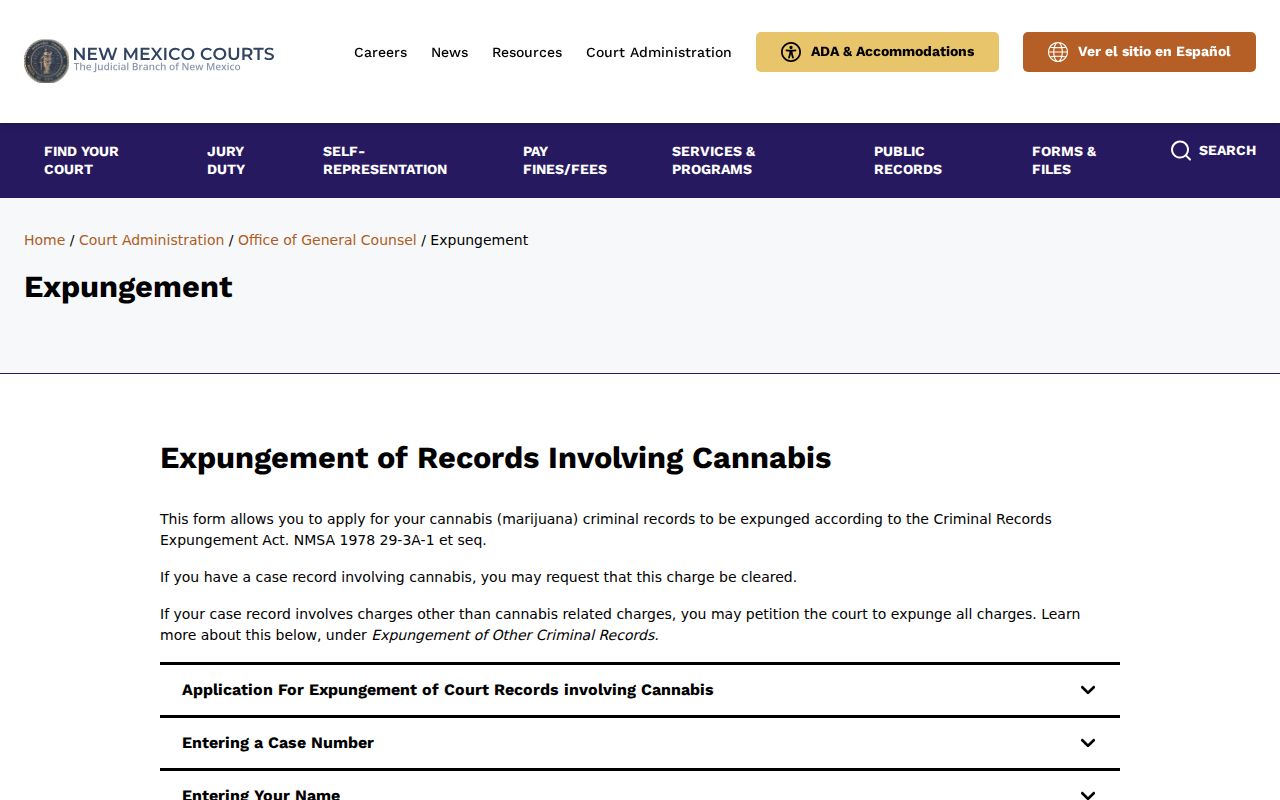
That identifier steers a criminal docket request to the right clerk. It does not settle the charge result or hand you a document image.
- Register of actions
- The chronological computerized list of filings, hearings, and orders in one case.
- Charge disposition
- The recorded result for a criminal charge; the certified judgment remains a separate clerk record.
- Setting
- A scheduled court event that should be checked against the newest entry and the responsible court.
Criminal Dockets: What They Show
A public criminal register helps you identify the case. It lets you follow its course. Just do not read too much into it. Case Lookup itself describes criminal charges and charge dispositions, parties and attorneys, a presiding judge, scheduled hearings, and the register of actions. Every field is just an index to case activity. A filing or charge entry is not a finding of guilt. A disposition line is not a certified judgment either. To see the underlying document, request it from the court that filed it.
| Case number and court | Identifies the record and helps distinguish District Court from Magistrate Court. |
|---|---|
| Parties, attorneys, and judge | Shows the case roles and the presiding judge named in the case information. |
| Charges | Shows the criminal allegations recorded for the case; read the actual record for precise wording. |
| Register of actions | Lists filings, hearings, and orders in chronological sequence. |
| Scheduled hearing and disposition | Shows a setting or recorded result, both subject to clerk confirmation and separate certification. |
Case Lookup shows no bond amounts. There are no account balances either. No detailed courtroom fields appear, and the screen offers no links to document images. Keep that in mind. A thin register entry in a Torrance County criminal docket can leave real questions open. The screen will not fill the gap.
Note: A register entry on a Torrance County docket only notes that case activity happened. The court clerk holds the actual document that carries legal effect.
Torrance Magistrate Criminal Dockets
Which court holds the file depends on the charge. In Torrance County, felony cases, juvenile matters, and criminal appeals go to the District Court. Misdemeanors, DWI, traffic matters, and felony preliminary hearings land in Magistrate Court. City ordinance violations may start in a municipal court. Petty misdemeanors and city traffic tickets may too. The statewide register is a fine first stop for any docket search. Still, the court clerk named on the case keeps the official file.
| Court | Criminal docket commonly covers | Record route |
|---|---|---|
| Torrance County District Court | Felonies, juvenile jurisdiction, and criminal appeals | Case Lookup, District Court Clerk, daily docket, or Seventh Judicial District request |
| Torrance County Magistrate Court | Misdemeanors, DWI, traffic, and felony preliminary hearings | Case Lookup, Magistrate Clerk, or Seventh Judicial District request |
| Moriarty, Estancia, and Mountainair municipal courts | City ordinances, local traffic, petty misdemeanors, and DWI/DUI | Municipal clerk and city court contact, with limited Case Lookup coverage |
Here is where to go. The District Court Clerk sits in the Neil Mertz Judicial Complex at 903 N. Fifth Street in Estancia. Reach the office at 505-384-2974 extension 40. Torrance Magistrate Court is listed at 1100 U.S. Route 66 in Moriarty, at 505-832-4476. The Seventh Judicial District locations page and the official Magistrate Court directory keep the two record channels straight.
Criminal Case Stages on the Docket
Read a criminal docket as a story, not a pile of labels. The history opens with a charge or filing. Then an arraignment or later hearing marks court activity. It may lead to another setting. A motion entry means someone asked the court for something. An order means the court acted. The public register does not open those papers. So the entry alone is not the ruling. A plea or trial can end the case, and sentencing activity may follow. One caution: confirm the newest hearing date with the court itself. An earlier date on the docket may have been continued.
Docket flow: Filing → Arraignment → Pretrial → Plea or Trial → Disposition → Sentencing
A criminal docket sometimes restarts under a new number. When a case leaves a lower court, the entry may show a notice of appeal, a transfer, a remand, or a fresh District Court case number. The history begins again from that point. The Seventh District charges a $35 docketing fee for a criminal appeal out of a lower court. That filing path is real but narrow. Most Magistrate and municipal cases in Torrance County never move up, so don't read the fee as a sign your case will.
Note: A later Torrance County continuance, notice, or hearing entry can bump an earlier date off the criminal register.
Torrance Criminal Register and Judgment
A register entry proves one thing only: the event made it onto the Torrance court record. It is not the judgment itself. It is not a copy of the motion it names, either. Public Case Lookup hands you the summary and the event list. The filed documents stay with the clerk. Signed orders, judgments, older files, hearing audio, and certifications all come from the clerk at the filing court. Torrance County District Court charges $0.35 per page for posted copies, $1.50 per pleading to certify, and $4 per CD for hearing audio.
When an online record will not surface, or a court-file request needs routing, fill out the New Mexico Judiciary IPRA form for the Seventh Judicial District. Name the Torrance court location plus the case number. You can also inspect court records in person at the clerk's office. Go to the office where the case was filed. One caution: the Torrance County Clerk runs its own public-records process for county-held records. That process never substitutes for a District or Magistrate case-file request.
Record boundary: use the register to locate the case and its events, then ask the responsible court clerk for the document or certified record behind the entry.
Torrance County Criminal Docket Courts
Torrance County splits its criminal work across courts rather than parking it in one place. General-jurisdiction felonies and appeals go to District Court. The misdemeanor, DWI, traffic, and felony-preliminary cases land in Magistrate Court, the state's limited-jurisdiction venue. Moriarty, Estancia, and Mountainair each keep municipal jurisdiction locally. So which clerk holds the file? Read the court title on the case number. Then match it to the court named in Case Lookup before you call anyone.
Need a near-term District Court date? The Torrance County District Court daily docket posts the current day plus six future days. The court warns that hearing details can be incomplete and offers no warranty on them. Use the schedule as one confirmation layer. Pair it with the register and the clerk, never as the whole criminal case file.
Note: Torrance County hearing information is most reliable when the current schedule, the register, and the filing court's clerk all agree.
Torrance DWI Drug Court Docket Context
The New Mexico Judiciary's FY23 annual report names a Torrance County Magistrate Court DWI Drug Court. Later reporting mentions adult drug-court graduates serving Torrance County. That explains why a public criminal case might show treatment-court connections. It does not build a separate public tool. The courts offer no public drug-court case search, calendar, eligibility list, or participant database.
Search the underlying Magistrate or District case number in Case Lookup. That works when the matter is public. For anything beyond the register, go through the responsible clerk. Do not expect treatment participation or compliance details in a public criminal docket. They rarely surface there.
Access Rules for Criminal Dockets
New Mexico Case Lookup shows the public a redacted slice of case information plus the register of actions. Filed documents are not part of the package. Juvenile criminal cases sit outside the public product. So do Family Violence Protection Act order-of-protection cases. Sealed and confidential matters stay out of general public view too. So a missing result tells you very little. It could point to those access rules, an older file, the wrong court, or a municipal case that belongs with a city clerk. The empty search box never explains itself.
Key rules:
New Mexico Case Access Policy assigns public online access to redacted records while sealed and confidential records stay restricted.
Inspection of Public Records Act information explains that a written Judiciary request identifies the requester and records with reasonable particularity.
Criminal Record Expungement Act information explains that eligible records can be removed from general public access through court procedures.
Expungement petitions stay sealed either way. Relief granted or denied, the information supplied in that process stays closed to the public. Eligibility turns on the statute and the court process, so take a specific record question to the current official forms and the clerk.
Torrance Municipal Criminal Docket Limits
Case Lookup is not a full city criminal-docket search. Its municipal coverage stops at historic DWI and criminal domestic-violence convictions from September 1, 1991 forward. Plenty falls outside that net. Routine municipal traffic citations, ordinance cases, petty misdemeanors, and active city proceedings all miss it. For a Moriarty, Estancia, or Mountainair matter, call the right municipal court clerk. Use the New Mexico municipal court directory to confirm the local channel.
Willard and Encino are absent from the state municipal-court directory. A local matter may belong with Torrance Magistrate Court instead. It could also sit with the issuing authority, not a presumed city-court docket. Check court routing first. That habit alone prevents a fruitless hunt through the wrong record system.
Note: Before any criminal appearance, the newest docket event, the hearing schedule, and the court clerk together give the most reliable check.